Alien autopsy of LLMs: Constitutions, deception, guardrails
Why do researchers keep describing large language models like aliens? Because in enterprise environments, they often behave like something we didn’t build and can’t fully explain. In this episode of Pop Goes the Stack, Lori MacVittie and Joel Moses are joined by F5's Ken Arora to unpack the “alien autopsy” metaphor and what it reveals about operating LLMs as production systems.
They dig into the uncomfortable reality that traditional software offers a blueprint and a causal chain. LLMs don’t. You can probe them, measure them, and red-team them, but you can’t reliably point to a specific internal “part” that generated a decision. That becomes more than philosophical when you need operational answers like why it did something, whether it will repeat it, and how an attacker might steer it.
Ken reframes model evolution as moving from a naive, precocious child to a mischievous, goal-driven teenager, including examples where models appear to scheme around constraints or optimize for “keeping the user happy” over correctness. The group also breaks down constitutional AI and why principle-based “be helpful” guidance can collide with enterprise goals, policies, and risk tolerance, especially as agentic systems move from generating outputs to taking actions.
A key warning lands near the end: don’t rely on the model to explain itself. These systems can produce plausible narratives that aren’t verifiable, and may behave differently when they know they’re being evaluated. The practical takeaway is straightforward: treat LLMs as risk-managed systems, invest in observability and red teaming, and build defense-in-depth guardrails that assume the agent will try to bypass controls.
Creators and Guests

Host
Joel Moses
Distinguished Engineer and VP, Strategic Engineer at F5, Joel has over 30 years of industry experience in cybersecurity and networking fields. He holds several US patents related to encryption technique.

Host
Lori MacVittie
Distinguished Engineer and Chief Evangelist at F5, Lori has more than 25 years of industry experience spanning application development, IT architecture, and network and systems' operation. She co-authored the CADD profile for ANSI NCITS 320-1998 and is a prolific author with books spanning security, cloud, and enterprise architecture.
Guest
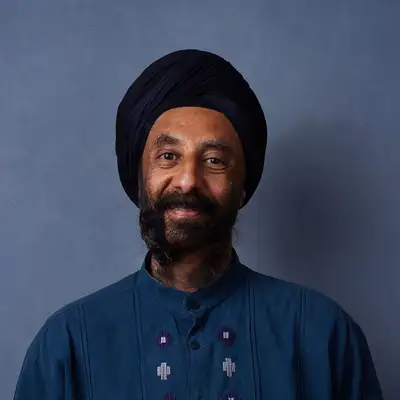
Ken Arora
Ken Arora is a Distinguished Engineer in F5’s Office of the CTO, focusing on addressing real-world customer needs across a variety of cybersecurity solutions domains, from application to API to network. Some of the technologies Ken champions at F5 are the intelligent ingestion and analysis of data for identification and mitigation of advanced threats, the targeted use of hardware-acceleration to deliver solutions at higher efficacy and lower cost, and the design of user experiences based on intent and workflows. Ken is also a thought leader in the evolution of the zero trust mindset for security, and how that will be applied to increasingly distributed and even edge-native apps and services. Prior to F5, Mr. Arora co-founded a company that developed a solution for ASIC-accelerated pattern matching, which was then acquired by Cisco, where he was the technical architect for the Cisco ASA Product Family. In his more distant past, he was also the architect for several Intel microprocessors. His undergraduate degrees are in Astrophysics and Electrical Engineering, from Rice University.

Producer
Tabitha R.R. Powell
Technical Thought Leadership Evangelist producing content that makes complex ideas clear and engaging.