
Data poisoning: You can’t patch what an LLM “learns”
If you’ve been treating “garbage in, garbage out” as a metaphor, this episode turns it into a live-fire scenario. Lori MacVittie and Joel Moses are joined by Dmitry Kit to unpack what happens when AI systems ingest misinformation that looks legitimate, and why “just patch it” doesn’t work the way it does in traditional software.
They start with a real experiment: researchers fabricated a fake medical condition, complete with fake papers, authors, and supporting citations, and watched it propagate. Within weeks, major AI systems began surfacing and citing it as real. The uncomfortable point is that once false knowledge gets embedded, you can’t reliably roll it back. Retraining is expensive, fine-tuning doesn’t truly excise the information, and even “fixes” can create unintended side effects because the bad pattern can be distributed throughout the network.
The conversation reframes the core issue as trust and weighting. Models don’t learn from “the internet” evenly; they learn from sources that are implicitly ranked as more authoritative, which means poisoning a trusted channel can have outsized impact. Even without a trusted source, rare or highly specific topics are vulnerable because the model has so little competing context that a small amount of misinformation can dominate.
So what can teams do? The practical guidance is to reduce the attack surface by curating the data set and narrowing scope. For enterprise use cases, that means constraining responses to approved, maintained knowledge, applying strong governance to RAG sources, and using additional validation layers, including “LLMs as judges,” to screen what gets added. The takeaway is simple: you can’t rely on cleanup after contamination. Prevention, curation, and constraint are the only scalable strategies.
Read the Bixonimania article: https://www.nature.com/articles/d41586-026-01100-y
Creators and Guests

Host
Joel Moses
Distinguished Engineer and VP, Strategic Engineer at F5, Joel has over 30 years of industry experience in cybersecurity and networking fields. He holds several US patents related to encryption technique.

Host
Lori MacVittie
Distinguished Engineer and Chief Evangelist at F5, Lori has more than 25 years of industry experience spanning application development, IT architecture, and network and systems' operation. She co-authored the CADD profile for ANSI NCITS 320-1998 and is a prolific author with books spanning security, cloud, and enterprise architecture.
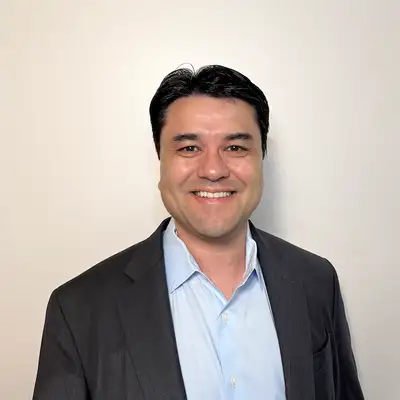
Guest
Dmitry Kit
Dmitry Kit, PhD is a Senior Manager, AI/ML Engineering at F5. He has over 15 years of experience in machine learning operations and artificial intelligence in both academia and industry. He brings deep expertise in developing scalable machine learning systems, optimizing data-driven workflows, and applying AI to solve complex business problems. He holds a PhD in Computer Science from The University of Texas at Austin and has previously held roles at Amazon and Hitachi Vantara, where he contributed to advancing AI-driven solutions across enterprise environments.

Producer
Tabitha R.R. Powell
Technical Thought Leadership Evangelist producing content that makes complex ideas clear and engaging.