Is AI making security obsolete?
What happens if AI finally writes secure code by default? In this episode of Pop Goes the Stack, F5's Lori MacVittie, Joel Moses, and Ken Arora take that question seriously, even if it feels like a punchline today. The premise is simple: if AI starts producing mechanically correct, vulnerability-free code at scale, the security industry doesn’t disappear. It gets forced up the stack.
They outline the near-term reality first: AI can already find and fix large classes of common issues in legacy code, and we’re likely heading into a chaotic cleanup phase as tools like Mythos-style systems accelerate remediation. But longer term, the conversation shifts to the uncomfortable tradeoff: code quality may improve faster than complexity shrinks. And complexity is where authority problems, logic flaws, and operational failures thrive.
Ken uses a practical analogy: a “perfectly safe driver” can still follow a GPS off a cliff. Likewise, perfect code can implement flawed or exploitable business logic flawlessly. Ticket scalping, abuse of workflows, and manipulation of incentives aren’t bugs; they’re behavior and design gaps. The bigger risk becomes how systems are orchestrated, who has permission to do what, and how autonomous components interpret intent.
They also flag the adversarial side: attackers won’t stop; they’ll shift from injecting obvious vulnerabilities to subtly influencing specs, workflows, and machine-generated architectures. As specs in plain language become the new “source code,” more people will be able to build powerful systems without the instinct to think like an attacker, widening the logic-attack surface.
The takeaway is a shift in mindset: security becomes less about chasing broken code and more about governing boundaries and monitoring behavior. AI will increasingly do exactly what you ask, which makes the new security imperative painfully clear: be precise about what you ask it to do, and enforce what it’s allowed to do when it tries to go beyond that.
Creators and Guests

Host
Joel Moses
Distinguished Engineer and VP, Strategic Engineer at F5, Joel has over 30 years of industry experience in cybersecurity and networking fields. He holds several US patents related to encryption technique.

Host
Lori MacVittie
Distinguished Engineer and Chief Evangelist at F5, Lori has more than 25 years of industry experience spanning application development, IT architecture, and network and systems' operation. She co-authored the CADD profile for ANSI NCITS 320-1998 and is a prolific author with books spanning security, cloud, and enterprise architecture.
Guest
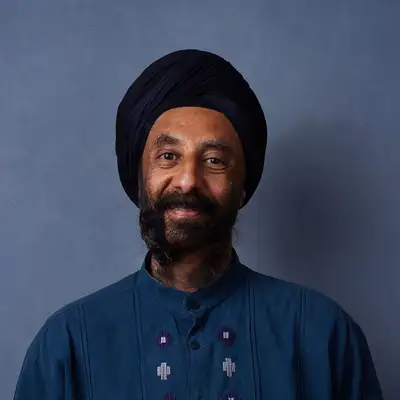
Ken Arora
Ken Arora is a Distinguished Engineer in F5’s Office of the CTO, focusing on addressing real-world customer needs across a variety of cybersecurity solutions domains, from application to API to network. Some of the technologies Ken champions at F5 are the intelligent ingestion and analysis of data for identification and mitigation of advanced threats, the targeted use of hardware-acceleration to deliver solutions at higher efficacy and lower cost, and the design of user experiences based on intent and workflows. Ken is also a thought leader in the evolution of the zero trust mindset for security, and how that will be applied to increasingly distributed and even edge-native apps and services. Prior to F5, Mr. Arora co-founded a company that developed a solution for ASIC-accelerated pattern matching, which was then acquired by Cisco, where he was the technical architect for the Cisco ASA Product Family. In his more distant past, he was also the architect for several Intel microprocessors. His undergraduate degrees are in Astrophysics and Electrical Engineering, from Rice University.

Producer
Tabitha R.R. Powell
Technical Thought Leadership Evangelist producing content that makes complex ideas clear and engaging.