
Training vs Inference: Are they the same?
Training and inference get lumped together in casual AI conversations, but they behave differently enough that the distinction matters for cost, architecture, and security. In this episode of Pop Goes the Stack, Lori MacVittie, Joel Moses, Ken Arora, and Kevin Baughman (who leads F5’s AI Center of Excellence) unpack what’s truly different, what’s the same, and where people get misled.
Joel makes the “math is the same” case: both phases run similar computations, but training must retain intermediate activations for backpropagation, while inference can discard them. Ken and Kevin pull the conversation back to practical differences: training is about baking knowledge into the model, while inference is about using a frozen model and shaping behavior with context, retrieval, and few-shot examples. The weights don’t change during inference; the input does, which is why it can feel like “learning” without actually being permanent.
That distinction becomes a security and governance lever. If you don’t want sensitive or proprietary data baked into a model, you avoid training on it and instead keep it in a controlled knowledge base (RAG or similar) that can be updated, removed, or scoped per tenant. Meanwhile, training pipelines emphasize massive data ingestion and throughput, and inference emphasizes responsiveness, session context, and efficient serving at scale.
The practical takeaway is to stop treating “AI workloads” as one thing. Training and inference require different pipeline designs, different tradeoffs in memory and bandwidth, and different approaches to data control. Pick your phase, understand the constraints, and build for it intentionally.
Creators and Guests

Host
Joel Moses
Distinguished Engineer and VP, Strategic Engineer at F5, Joel has over 30 years of industry experience in cybersecurity and networking fields. He holds several US patents related to encryption technique.

Host
Lori MacVittie
Distinguished Engineer and Chief Evangelist at F5, Lori has more than 25 years of industry experience spanning application development, IT architecture, and network and systems' operation. She co-authored the CADD profile for ANSI NCITS 320-1998 and is a prolific author with books spanning security, cloud, and enterprise architecture.
Guest
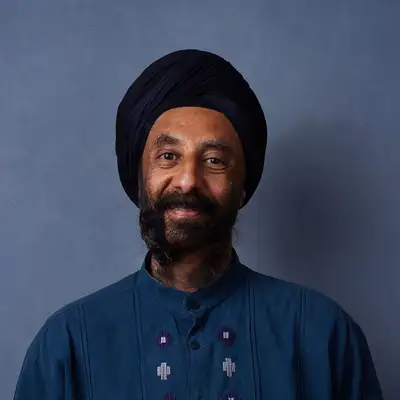
Ken Arora
Ken Arora is a Distinguished Engineer in F5’s Office of the CTO, focusing on addressing real-world customer needs across a variety of cybersecurity solutions domains, from application to API to network. Some of the technologies Ken champions at F5 are the intelligent ingestion and analysis of data for identification and mitigation of advanced threats, the targeted use of hardware-acceleration to deliver solutions at higher efficacy and lower cost, and the design of user experiences based on intent and workflows. Ken is also a thought leader in the evolution of the zero trust mindset for security, and how that will be applied to increasingly distributed and even edge-native apps and services. Prior to F5, Mr. Arora co-founded a company that developed a solution for ASIC-accelerated pattern matching, which was then acquired by Cisco, where he was the technical architect for the Cisco ASA Product Family. In his more distant past, he was also the architect for several Intel microprocessors. His undergraduate degrees are in Astrophysics and Electrical Engineering, from Rice University.


Producer
Tabitha R.R. Powell
Technical Thought Leadership Evangelist producing content that makes complex ideas clear and engaging.